Maintenance Dredging and Placement

Page last updated on 19-11-2026.

Maintenance Dredging and Placement

Maintenance dredging is a routine activity carried out by ports around the world to keep shipping channels and berths safe for vessels. Wind, waves and river flows naturally deposit sand, silt and sediments within waterways over time. Dredging removes this material to maintain the depths needed for ships to safely access ports.

At the Port of Townsville, maintenance dredging is carefully managed under strict environmental approvals and informed by scientific monitoring, environmental assessment and regulatory oversight.


Understanding Cleveland Bay

Cleveland Bay is a large, north-facing shallow bay that is naturally turbid. A range of factors contribute to turbidity levels, including weather events, wind, tides, flooding, cyclones and sediment run-off from local waterways, as well as sediment transported from the Burdekin River. Water quality monitoring undertaken in Cleveland Bay shows that wind-driven waves are the primary driver of turbidity in the bay. 

Maintenance Dredging Updates

The Port undertakes maintenance dredging as required to maintain safe shipping access and navigational depths. Information about recent and upcoming maintenance dredging activities is provided below. Queensland's statewide maintenance dredging schedule is available on the Department of Transport and Main Roads website. 
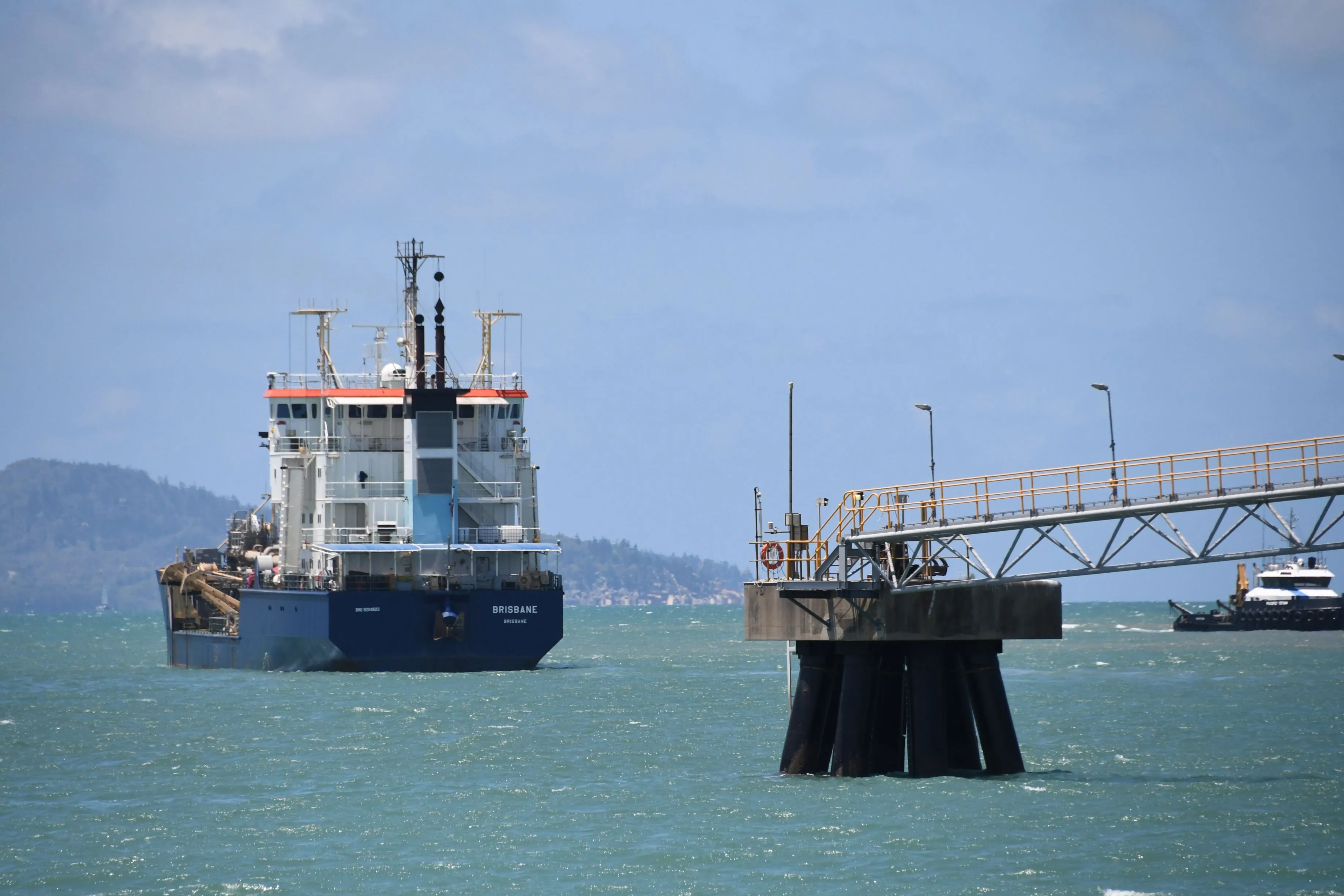
Annual maintenance dredging took place in Cleveland Bay with trailing suction hopper dredge (TSHD) Brisbane undertaking two campaigns, the first from 17 August 2026 to 17 September 2026. Due to increased siltation in the inshore end of the shipping channel (Platypus Channel), TSHD Brisbane returned to undertake further maintenance dredging from 4 November 2026 to 16 November 2026. The TSHD Brisbane was intentionally scheduled to arrive after the October 2026 full moon coral spawning period. The dredging duration and associated volumes remained within the limits of all environmental approvals and permits.
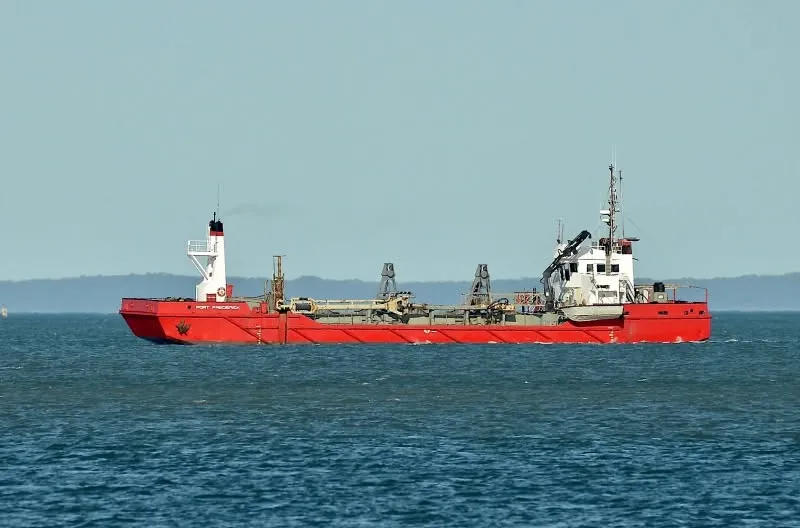
Planned maintenance dredging is currently underway in the Ross River adjacent to the Townsville Marine Precinct, with works expected to conclude in mid-December 2026. Dredging commenced on 10 October 2026 and is scheduled to be completed by 18 December 2026. The work is being undertaken by trailing suction hopper dredge (TSHD) Port Frederick during daylight hours only. Works are focused on the section of the channel extending from just upstream from the Townsville Marine Precinct entrance to the mouth of Ross River, removing naturally accumulated sediment to maintain safe navigable depths for vessels. The Ross River dredging and placement areas are located more than 6km from sensitive coral reef habitats and modelling does not predict sediment plumes from the activities will affect these habitats. As an additional precaution, TSHD Frederick will not undertake dredging or sea placement during the predicted October and November full moon coral spawning periods. Dredging operations ceased from the evening of 24 October to 4 November 2026 and will again be suspended from the evening of 23 November, recommencing on 4 December 2026.


Frequently Asked Questions

What is maintenance dredging?

Maintenance dredging involves the removal of sediment that naturally accumulates within shipping channels and other port underwater infrastructure through natural processes such as tides, wind or wave action. It is undertaken to maintain safe and efficient shipping access to the Port.

Why does the Port of Townsville undertake maintenance dredging?

The Port is required to undertake maintenance dredging of its infrastructure, including the shipping channels, to ensure navigational safety of vessels under the Transport Infrastructure Act 1994. Without maintenance dredging, channels become shallower over time, restricting the safe passage of vessels and impacting the efficient operation of the Port and associated supply chains. Maintaining safe and reliable access for shipping helps support the movement of goods, commodities and essential supplies that North Queensland communities and industries rely on.

How does the Port manage dredging activities?

The Port's Long-Term Maintenance Dredging Management Plan (LTMDMP) provides the management framework for maintenance dredging, helping ensure essential shipping access can continue while protecting and monitoring environmental values in Cleveland Bay and the Great Barrier Reef World Heritage Area. The Port operates under environmental permits and management plans, with oversight from the National Environmental Protection Agency (NEPA) and the Department of Environment, Tourism, Science and Innovation (DETSI). Dredging activities are supported by scientific investigations, environmental assessments and ongoing monitoring to inform management decisions and ensure compliance with regulatory requirements. Each maintenance dredging campaign has a specific Dredge Management Plan aligned to the dredging methodology and area to be dredged, which will align with the LTMDMP.

Why is dredged material placed at sea?

The majority of maintenance dredged material consists of naturally occurring silts, clays and fine sands removed from existing port infrastructure. For the large volumes generated through routine maintenance dredging, placement at the Dredge Material Placement Area (DMPA) in Cleveland Bay is currently considered the most practical and feasible management option for suitable dredged material. Dredged material placement is undertaken in accordance with regulatory approvals and permit conditions, including a sea dumping permit which is issued by the National Environmental Protection Agency (NEPA).

Where is the material placed at sea?

The designated Dredge Material Placement Area (DMPA) is located in Cleveland Bay outside the Great Barrier Reef Marine Park, away from sensitive receptors including coral reefs and permanent seagrass beds. It's located in depths of approximately 12-16 metres and was intentionally selected to reduce the likelihood of wave-driven sediment resuspension compared with shallower areas of Cleveland Bay. The DMPA is located within the Port Exclusion Area, an area designated by the State and Federal Governments for commercial and industrial port activities.

How was the sea placement area selected?

The Dredge Material Placement Area (DMPA) was selected in 1993 following a comprehensive, independent, scientific environmental monitoring program undertaken in conjunction with government agencies, the Great Barrier Reef Marine Park Authority (GBRMPA), James Cook University (JCU) and the Australian Institute of Marine Science (AIMS). The location was selected based on environmental, operational and scientific considerations, including water depth to minimise wave driven resuspension, local hydrodynamics and separation from sensitive marine habitats.

Have alternatives to sea placement been considered?

Yes. The Port has assessed a range of alternatives, including land placement, reclamation, beneficial reuse opportunities, alternative offshore placement sites and the option of not dredging. Each option presents different environmental, technical, operational, regulatory and cost considerations. While suitable material may be beneficially reused on land where feasible, routine maintenance dredging generates large volumes of predominantly fine silts, clays and sands that require significant treatment, dewatering and storage if placed on land. For this reason, placement at the sea Dredge Material Placement Area remains the most practical and feasible management option for suitable maintenance dredged material.

What environmental monitoring is undertaken to inform dredging management?

The Port undertakes a range of environmental monitoring and assessment programs to inform dredging management. Programs include water quality monitoring, annual seagrass and coral monitoring, hydrodynamic modelling and environmental assessments undertaken over many years throughout Cleveland Bay which support decision making relating to maintenance dredging and dredged material placement. These studies focus on sensitive receptors throughout Cleveland Bay, including Magnetic Island. Monitoring data and environmental studies are available on the Port's website here (insert link)

How does the Port engage with stakeholders on maintenance dredging activities?

The Port has a Technical Advisory and Consultative Committee (TACC) with members drawn from Commonwealth, State and Local Government organisations, community groups, research institutes and other relevant stakeholders whose activities may be influenced by maintenance dredging or placement activities. The TACC is an important consultative mechanism and is intended to assist the Port to access local knowledge and reconcile various stakeholder interests. The current TACC member organisations are:

  • Independent Chair
  • Port of Townsville
  • National Environmental Protection Agency (NEPA)
  • Great Barrier Reef Marine Park Authority (GBRMPA)
  • Department of Environment, Tourism, Science and Innovation (DETSI)
  • Maritime Safety Queensland (MSQ)
  • Department of Primary Industries (DPI)
  • Townsville City Council (TCC)
  • Port of Townsville Planning and Environmental Working Group (PEWG) Chair
  • Department of State Development, Infrastructure and Planning (DSIP) State Assessment and Referral Agency (SARA) representatives
  • Department of Transport and Main Roads (DTMR)
  • Australian Institute of Marine Science (AIMS)
  • Community member organisations appointed via expression of interest process.

In addition to engagement undertaken through the Technical Advisory and Consultative Committee (TACC) the Port may undertake targeted engagement activities with relevant stakeholders and community groups as required to support dredging and sea placement activities.

What approvals regulate dredging and sea placement activities?

Dredging and dredged material placement activities are subject to State and Commonwealth regulatory approvals. Approvals to dredge and placed dredged material in the Dredge Material Placement Area (DMPA) are assessed and approved by the Queensland Department of Environment, Tourism, Science and Innovation (DETSI) and the Australian Government's National Environmental Protection Agency (NEPA). Under legislation, all dredge material that is placed in the DMPA must be tested and assessed as suitable for unconfined sea placement against the National Assessment Guidelines for Dredging 2009. To utilise the DMPA, Port of Townsville is required to hold a sea dumping permit, which is issued by NEPA.

[feature-block]

Information about capital dredging

This page relates to maintenance dredging which is undertaken to maintain safe navigational depths within existing shipping channels and waterways.

Information about capital dredging associated with the Port Expansion Project, including channel widening and deepening works, environmental approvals and monitoring, is available on the Channel Upgrade project pages.

Learn more about the Channel Upgrade project

[/feature-block]