More pages in this section
Page last updated on 29-07-2026.
Application for 10 Year Sea Dumping Permit
The Port of Townsville is more than a piece of infrastructure – it is part of the story of North Queensland.
Throughout this website you will see references to Our Port and Our Environment. The use of the word ‘our’ is deliberate. Using ‘our’ reflects the Port’s commitment to working collaboratively with Traditional Owners, community members, environmental groups, government agencies, industry and other stakeholders.
As you explore this website, we invite you to learn more about Our Port, Our Environment and the science, monitoring and consultation that support the Port's sea dumping permit application.
[feature-block]
The Port's current sea dumping permit expires in December 2026 and cannot be extended further.
A new permit is required to allow the continued placement of maintenance dredged material in the existing Dredge Material Placement Area (DMPA) in Cleveland Bay to support safe and efficient port operations.
[/feature-block]
Maintenance Dredging at the Port of Townsville
The Port of Townsville is accessed via a 14-kilometre shipping channel through Cleveland Bay, which is maintained with sufficient depth to allow vessels to safely enter and operate at the Port. Maintenance dredging has been undertaken at the Port since the late 19th century to ensure this critical infrastructure remains safe and operational.
Under the Transport Infrastructure Act 1994 (Queensland), the Port is responsible for establishing, managing and operating efficient port facilities and services. The Port is also recognised as a Priority Port under the Sustainable Ports Development Act 2015 (Queensland), reflecting its role in supporting supply chains and economic activity across North Queensland.
Because port channels, berths and harbour areas are deeper than the surrounding seabed, they naturally accumulate sediment moved through Cleveland Bay by wind, waves and currents. If not removed, this sediment buildup can restrict vessel access and impact port operations and supply chains.
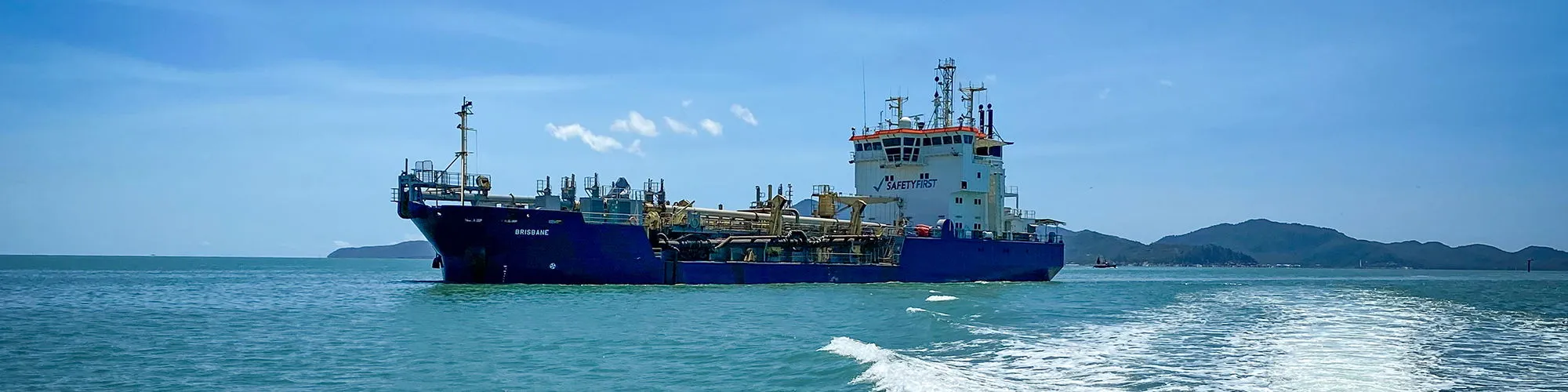
To ensure safe ship and vessel access, each year the Port undertakes routine maintenance dredging of its existing underwater infrastructure and places the dredged material at sea in accordance with regulatory approvals.
Sea Placement of Maintenance Dredged Material
Sediment that accumulates within the Port’s underwater infrastructure is typically dredged during a short annual campaign and placed at an approved Dredge Material Placement Area (DMPA) located in Cleveland Bay.
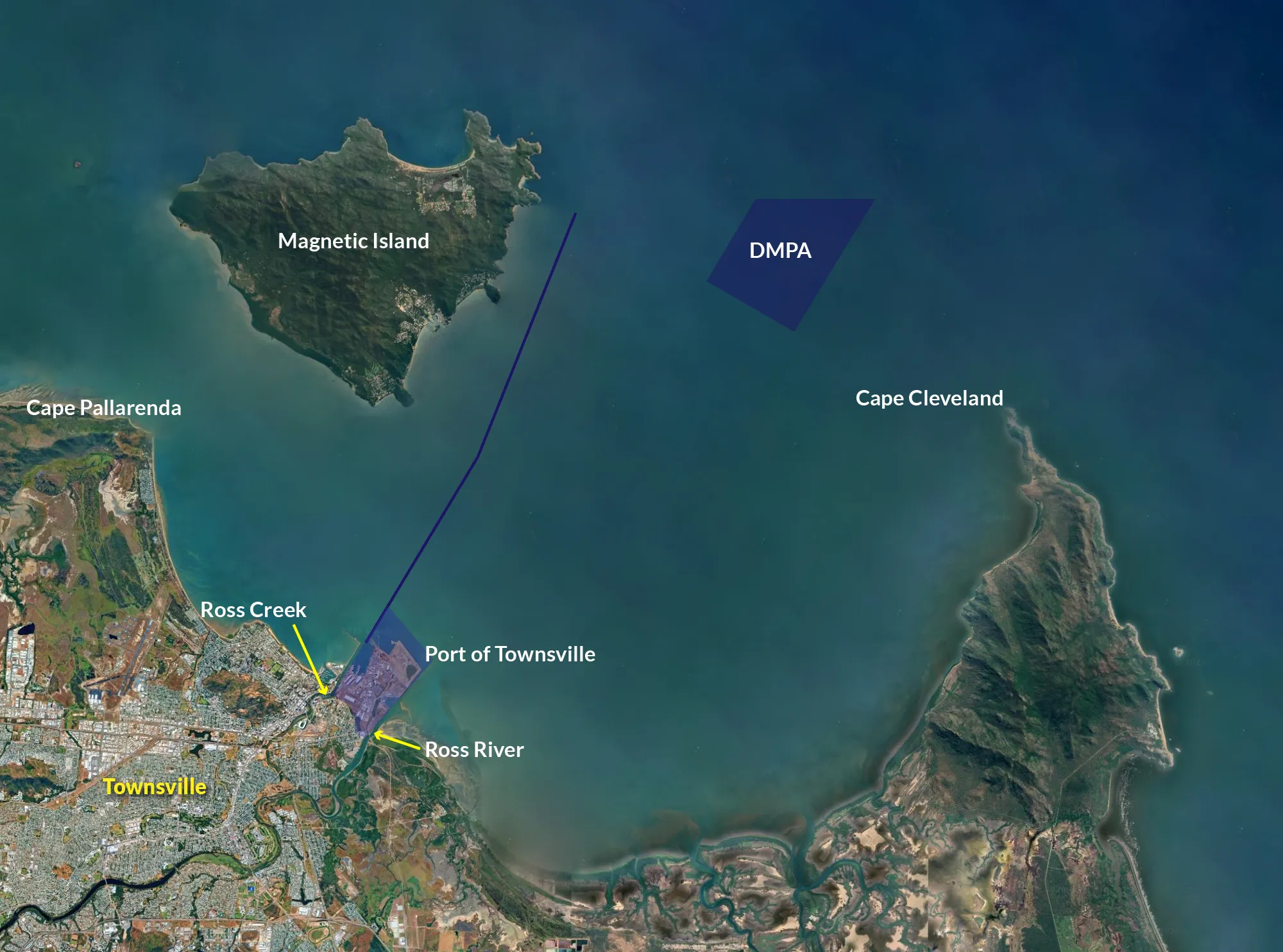 The DMPA:
- is located outside the Great Barrier Reef Marine Park, and
- sits within the Port exclusion area designated by State and Commonwealth governments for commercial and industrial port activities.
The current DMPA was established in 1993, informed by comprehensive independent scientific investigations in collaboration with government agencies, the Great Barrier Reef Marine Park Authority, James Cook University and the Australian Institute of Marine Science. The area has been used for the placement of maintenance dredged material since that time.
Regulatory Approvals
Maintenance dredging and sea placement of dredged material are regulated under approval frameworks administered by both the Queensland and Commonwealth governments.
The Port currently holds all required approvals to undertake maintenance dredging and sea placement.
The current sea dumping permit expires in December 2026. A new permit is required to support continued placement of maintenance dredged material at the existing DMPA and to support safe and efficient operations at Townsville port.
New Sea Dumping Permit Application
To place maintenance dredge material at sea, the Port of Townsville is required to hold a sea dumping permit under the Environmental Protection (Sea Dumping) Act 1981 (Commonwealth), administered by the National Environmental Protection Agency (NEPA).
In 2026, the Port will apply for a new sea dumping permit for a 10-year period (2027–2037). This proposed permit duration is consistent with other Queensland ports and will provide long-term certainty for:
- safe port operations,
- customers and regional supply chains, and
- the broader North Queensland community.
The permit application will be supported by updated scientific assessments, environmental monitoring and technical studies related to maintenance dredging and the placement of dredge material at the existing DMPA.
The Port will also submit an updated Long-Term Maintenance Dredging Management Plan (2027–2037) as part of the application.
Key Details of the Permit Application
- The application will be for the continued placement of maintenance dredged material in the existing DMPA in Cleveland Bay. The Port is not proposing any change to the location or configuration of the DMPA.
- The application is seeking an approval for sea placement of dredge material for a 10-year period.
- The application will seek approval for sufficient volumes to support ongoing maintenance dredging. A contingency component will be included to ensure navigational safety can be maintained following extreme weather events over the life of the permit.
- The application relates only to maintenance dredging material.
Stakeholder Engagement
The Port is committed to listening to community views and ensuring concerns are understood and considered as part of the permit application process.
The Port will engage with its existing stakeholder forums and networks, including the Technical Advisory and Consultative Committee (TACC), as well as the broader community, to share information about the permit application and invite feedback.
Information about the application, supporting documents and opportunities to provide feedback are available through the Port’s consultation webpage and stakeholder information sessions.